Category: News (Older posts)

  • CO Division of Wildlife and Energy Cos enter into 355,000 acres of Wildlife Habitat Mitigation Plans

    Wildlife Habitat Mitigation Plans are a tool created by Colorado’s new oil and gas rules, adopted in December 2008 by the Colorado OIl and Gas Conservation Commission, pursuant to 2007 legislation – House bills 1298 and 1341.

    According to the press release issued by the Governor’s office, the agreements were negotiated over the past 18 months.   “By consulting with the Colorado Division of Wildlife on how to prevent or mitigate damage to wildlife habitat before drilling starts, oil and gas operators will be able to secure approvals for thousands of natural gas wells more quickly.  The agreements also provide the energy companies and their project planners with additional certainty. ”

    “Last week, the Division of Wildlife and Exxon Mobil Corp. signed the largest wildlife protection plan to date, covering 150,000 acres of mainly federal land in Rio Blanco County.”

    “Encana Oil & Gas (USA) Inc., whose North Parachute ranch plan was the first major agreement to be signed, and Williams Production RMT, which has signed two separate agreements for acreage bracketing the Colorado River, are also among the companies to enter into new agreements with the state.”

    “Other companies are: Antero Resources Piceance Corp., Marathon OIl Co., Noble Energy Inc., Black Hills Exploration & Production, Delta Petroleum and Gunnison Energy Corp.

    Colorado Wildlife Federation applauds such planning by several companies on a parcel  level – rather than addressing wildlife impacts on a permit application basis.  These parcels are in the heart of the Piceance Basin in northwest Colorado – home to some of the best, albeit shrinking wildlife habitat on the planet.   We are hopeful that these agreements translate into minimized adverse wildlife impacts on the ground as wellpads and infrastructure emerge. Time will tell – over the next few years –  how effective the negotiated measures and best management practices are to minimize adverse impacts to wildlife.   Monitoring and assessment are needed to determine on-the-ground results, as commented by CWF at the August 12 monthly meeting of the Colorado Oil and Gas Conservation Commission.   Commissioners discussed monitoring and assessment following CWF’s comments.  It now appears that annual reports will be made at Commission meetings.

  • CWF applauds passage of House CLEAR Act- Land Water Conservation Fund provision and removal of 2 exemptions

    On July 30, the House voted to pass the CLEAR  Act.  Important to CWF is the full funding provision for the Land and Water Conservation Act.  The  Land and Water Conservation Fund (LWCF)  was authorized in 1965, funded with offshore oil and gas revenue.  Its purposes are to provide recreation access (parks and natural lands), and to protect important lands and waters.  Over the years, Congress and various administrations have not authorized a substantial  percentage of the full amount authorized annually and diverted the funds from their intended purpose.   LWCF is the only account that provides a specific conservation benefit from federal energy development.

    In addition, the House version of the CLEAR Act would eliminate the exemptions known as “categorical exclusions.”  These categorical exclusions  exempted certain drilling sites from public health and environmental impacts.   The House version also would repeal the exemption from the Clean Water Act protections during construction of oil and gas drilling pads.

    The Senate is expected to vote on its version of the Act during the lame duck session after the elections

  • CWF applauds passage of House CLEAR Act- Land Water Conservation Fund provision and removal of 2 exemptions

    On July 30, the House voted to pass the CLEAR  Act.  Important to CWF is the full funding provision for the Land and Water Conservation Act.  The  Land and Water Conservation Fund (LWCF)  was authorized in 1965, funded with offshore oil and gas revenue.  Its purposes are to provide recreation access (parks and natural lands), and to protect important lands and waters.  Over the years, Congress and various administrations have not authorized a substantial  percentage of the full amount authorized annually and diverted the funds from their intended purpose.   LWCF is the only account that provides a specific conservation benefit from federal energy development.

    In addition, the House version of the CLEAR Act would eliminate the exemptions known as “categorical exclusions.”  These categorical exclusions  exempted certain drilling sites from public health and environmental impacts.   The House version also would repeal the exemption from the Clean Water Act protections during construction of oil and gas drilling pads.

    The Senate is expected to vote on its version of the Act during the lame duck session after the elections

  • Dept. Interior Finalizes Onshore Oil and Gas Leasing Reforms

    On May 17, 2010 the Department of Interior announced finalized oil and gas leasing reforms for BLM managed sub-surface lands.   This means the policy applies to leasing of federal minerals under land surfaces managed by BLM, state surface lands, and private land surfaces.   See the Department of Interior press release below.

    CWF issued a press advisory, stating: “The Department of Interior policy on oil and gas leasing issued today is an important and long-needed step to balance key needs of Colorado’s wildlife before offering BLM lands for lease sales.  Of particular note is the concept of a “master leasing plan” that will factor in the needs of  wildlife (and other resource issues) before BLM determines whether an area will be offered for lease.  For too long, we have been forced to submit protests in an attempt to avoid detrimental cumulative impacts when it comes to energy development, reducing the important habitat areas our wildlife needs to survive.  This federal stewardship action, coupled with Colorado’s own rules to protect wildlife habitat during energy development, means our wildlife heritage can survive.”

    *WASHINGTON, D.C. –* As part of Secretary of the Interior Ken Salazar’s
    ongoing agenda to change how the Department of the Interior does business,
    the Bureau of Land Management today finalized several reforms to its oil and
    gas program that will improve environmental protection of important natural
    resources on U.S. public lands while aiding in the orderly leasing and
    balanced development of the nation’s energy supply.

    œWe must continue to move forward quickly and responsibly on our agenda to
    reform the management of our nation’s onshore and offshore energy resources
    and our oversight of the companies that develop them, said Secretary
    Salazar. œThe BLM reforms we are finalizing today establish a more orderly,
    open, and environmentally sound process for developing oil and gas resources
    on public lands. The BP oil spill is a stark reminder of how we must
    continue to push ahead with the reforms we have been working on and which we
    know are needed.

    œThese reforms take a fresh look – from inside the Federal government and
    from outside – at how we can better manage Americans’ energy resources,
    said BLM Director Bob Abbey. œThey will improve protections for land,
    water, and wildlife, and reduce potential conflicts that can lead to costly
    and time-consuming protests and litigation of leases. The reforms will also
    move control of the leasing process from Washington, DC, to the field.

    Under the reformed oil and gas leasing
    policy<http://www.doi.gov/documents/BLM_Energy_Reform_Fact_sheet.pdf>,
    the BLM will:

    · Engage the public in the development of Master Leasing Plans (MLP)
    prior to leasing in certain areas where significant new oil and gas
    development is anticipated. The intent is to fully consider other important
    natural resource values before making a decision on leasing and development
    in an area.

    � Ensure potential lease sales are fully coordinated both
    internally and externally, including public participation, and
    interdisciplinary review of available information, as well as on-
    site visits to parcels prior to leasing when necessary to supplement or
    validate existing data.

    · Require an œextraordinary circumstances review screen before
    applying the categorical exclusions in the Energy Policy Act of 2005 to oil
    and gas drilling activities on BLM lands. Categorical exclusions are
    categories of actions that do not have a significant effect on the quality
    of the human environment, and for which the BLM is generally not required to
    prepare extensive environmental reviews. A review for extraordinary
    circumstances has been required for all administratively-established
    categorical exclusions, and will now apply to oil and gas categorical
    exclusions established by the Energy Policy Act of 2005, as well.

    In January, Secretary Salazar outlined the
    reforms<http://www.doi.gov/news/pressreleases/Secretary-Salazar-Launches-Onshore-Oil-and-Gas-Leasing-Reforms.cfm>that
    BLM is finalizing today. Many of the reforms follow the
    recommendations of an interdisciplinary review
    team<http://www.doi.gov/news/09_News_Releases/100809a.html>that
    studied a controversial 2008 oil and gas lease sale in Utah.

    Abbey said the increased opportunity for public participation and a more
    thorough environmental review process and documentation can help reduce the
    number of protests filed, as well as enhance the BLM’s ability to resolve
    protests prior to lease sales.

    œThe consequence of not following this front-loaded process in the past has
    been significant protests and appeals, coupled with judicial restraints on
    development, job loss, and diminished access to energy resources, said
    Abbey. œInstead of the BLM investing vast amounts of staff time and
    attention to defending lawsuits and revisiting the leasing process after
    receiving direction from the courts, our goal is to undertake important
    reviews in advance.

    The BLM manages 253 million acres – more land than any other Federal agency.
    This land, known as the National System of Public Lands, is primarily
    located in 12 Western states, including Alaska. The BLM, with a budget of
    about $1 billion, also administers 700 million acres of sub-surface mineral
    estate throughout the nation. The BLM’s multiple-use mission is to sustain
    the health and productivity of the public lands for the use and enjoyment of
    present and future generations. The BLM accomplishes this by managing such
    activities as outdoor recreation, livestock grazing, mineral development,
    and energy production, and by conserving natural, historical, cultural, and
    other resources on public lands.

    *###*

    Note: Later in the day, BLM posted on its website, Instructional Memorandum No. 2010-117
    “Oil and Gas Leasing Reform — Land Use Planning and Lease Parcel Reviews”
    and Instructional Memorandum No. 2010-118 “Energy Policy Act Section 390
    Categorical Exclusion Policy Revision.”

  • Dept. Interior Finalizes Onshore Oil and Gas Leasing Reforms

    On May 17, 2010 the Department of Interior announced finalized oil and gas leasing reforms for BLM managed sub-surface lands.   This means the policy applies to leasing of federal minerals under land surfaces managed by BLM, state surface lands, and private land surfaces.   See the Department of Interior press release below.

    CWF issued a press advisory, stating: “The Department of Interior policy on oil and gas leasing issued today is an important and long-needed step to balance key needs of Colorado’s wildlife before offering BLM lands for lease sales.  Of particular note is the concept of a “master leasing plan” that will factor in the needs of  wildlife (and other resource issues) before BLM determines whether an area will be offered for lease.  For too long, we have been forced to submit protests in an attempt to avoid detrimental cumulative impacts when it comes to energy development, reducing the important habitat areas our wildlife needs to survive.  This federal stewardship action, coupled with Colorado’s own rules to protect wildlife habitat during energy development, means our wildlife heritage can survive.”

    *WASHINGTON, D.C. –* As part of Secretary of the Interior Ken Salazar’s
    ongoing agenda to change how the Department of the Interior does business,
    the Bureau of Land Management today finalized several reforms to its oil and
    gas program that will improve environmental protection of important natural
    resources on U.S. public lands while aiding in the orderly leasing and
    balanced development of the nation’s energy supply.

    œWe must continue to move forward quickly and responsibly on our agenda to
    reform the management of our nation’s onshore and offshore energy resources
    and our oversight of the companies that develop them, said Secretary
    Salazar. œThe BLM reforms we are finalizing today establish a more orderly,
    open, and environmentally sound process for developing oil and gas resources
    on public lands. The BP oil spill is a stark reminder of how we must
    continue to push ahead with the reforms we have been working on and which we
    know are needed.

    œThese reforms take a fresh look – from inside the Federal government and
    from outside – at how we can better manage Americans’ energy resources,
    said BLM Director Bob Abbey. œThey will improve protections for land,
    water, and wildlife, and reduce potential conflicts that can lead to costly
    and time-consuming protests and litigation of leases. The reforms will also
    move control of the leasing process from Washington, DC, to the field.

    Under the reformed oil and gas leasing
    policy<http://www.doi.gov/documents/BLM_Energy_Reform_Fact_sheet.pdf>,
    the BLM will:

    · Engage the public in the development of Master Leasing Plans (MLP)
    prior to leasing in certain areas where significant new oil and gas
    development is anticipated. The intent is to fully consider other important
    natural resource values before making a decision on leasing and development
    in an area.

    � Ensure potential lease sales are fully coordinated both
    internally and externally, including public participation, and
    interdisciplinary review of available information, as well as on-
    site visits to parcels prior to leasing when necessary to supplement or
    validate existing data.

    · Require an œextraordinary circumstances review screen before
    applying the categorical exclusions in the Energy Policy Act of 2005 to oil
    and gas drilling activities on BLM lands. Categorical exclusions are
    categories of actions that do not have a significant effect on the quality
    of the human environment, and for which the BLM is generally not required to
    prepare extensive environmental reviews. A review for extraordinary
    circumstances has been required for all administratively-established
    categorical exclusions, and will now apply to oil and gas categorical
    exclusions established by the Energy Policy Act of 2005, as well.

    In January, Secretary Salazar outlined the
    reforms<http://www.doi.gov/news/pressreleases/Secretary-Salazar-Launches-Onshore-Oil-and-Gas-Leasing-Reforms.cfm>that
    BLM is finalizing today. Many of the reforms follow the
    recommendations of an interdisciplinary review
    team<http://www.doi.gov/news/09_News_Releases/100809a.html>that
    studied a controversial 2008 oil and gas lease sale in Utah.

    Abbey said the increased opportunity for public participation and a more
    thorough environmental review process and documentation can help reduce the
    number of protests filed, as well as enhance the BLM’s ability to resolve
    protests prior to lease sales.

    œThe consequence of not following this front-loaded process in the past has
    been significant protests and appeals, coupled with judicial restraints on
    development, job loss, and diminished access to energy resources, said
    Abbey. œInstead of the BLM investing vast amounts of staff time and
    attention to defending lawsuits and revisiting the leasing process after
    receiving direction from the courts, our goal is to undertake important
    reviews in advance.

    The BLM manages 253 million acres – more land than any other Federal agency.
    This land, known as the National System of Public Lands, is primarily
    located in 12 Western states, including Alaska. The BLM, with a budget of
    about $1 billion, also administers 700 million acres of sub-surface mineral
    estate throughout the nation. The BLM’s multiple-use mission is to sustain
    the health and productivity of the public lands for the use and enjoyment of
    present and future generations. The BLM accomplishes this by managing such
    activities as outdoor recreation, livestock grazing, mineral development,
    and energy production, and by conserving natural, historical, cultural, and
    other resources on public lands.

    *###*

    Note: Later in the day, BLM posted on its website, Instructional Memorandum No. 2010-117
    “Oil and Gas Leasing Reform — Land Use Planning and Lease Parcel Reviews”
    and Instructional Memorandum No. 2010-118 “Energy Policy Act Section 390
    Categorical Exclusion Policy Revision.”

  • CWF-NWF Submit Protest of BLM Proposed Lease Sale

    On May 1, Colorado Wildlife Federation and the National Wildlife Federation submitted a protest to the BLM regarding parcels that the agency proposes to offer for lease at its May auction.  These parcels were protested because 2 impact greater sage grouse leks, and two are within a bighorn sheep migratory corridor.  Others impact moose production areas, pronghorn and deer severe winter range, and elk winter concentration areas.  The cumulative impact upon wildlife from these parcels and the cumulative effect of earlier leases in addition to these proposed leases is of great concern to us.

    media/Final_CWFNWF_Lease_Sale_Protest_4-28.pdf


    Note:  the BLM has decided to defer the two parcels that contain greater sage grouse leks/production areas.  We believe our protest  contributed to the decision to defer.    Unfortunately, the other parcels were offered for lease sale.

  • CWF-NWF Submit Protest of BLM Proposed Lease Sale

    On May 1, Colorado Wildlife Federation and the National Wildlife Federation submitted a protest to the BLM regarding parcels that the agency proposes to offer for lease at its May auction.  These parcels were protested because 2 impact greater sage grouse leks, and two are within a bighorn sheep migratory corridor.  Others impact moose production areas, pronghorn and deer severe winter range, and elk winter concentration areas.  The cumulative impact upon wildlife from these parcels and the cumulative effect of earlier leases in addition to these proposed leases is of great concern to us.

    media/Final_CWFNWF_Lease_Sale_Protest_4-28.pdf


    Note:  the BLM has decided to defer the two parcels that contain greater sage grouse leks/production areas.  We believe our protest  contributed to the decision to defer.    Unfortunately, the other parcels were offered for lease sale.

  • Final CO Roadless Plan Adds Protections for Wildlife

    On April 6, 2010, Governor Ritter released the State’s revised roadless plan and forwarded it to the US Department of Agriculture for review and approval.  IN CWF’s view, the revised plan contains important protections for wildlife, including the addition of 410,000 acres of habitat that had been recommended for inclusion by state wildlife biologists in 2009.  The plan would redraw roadless boundaries to include this important wildlife habitat that was left out of the previous state roadless plan and the 2001 federal roadless rule.

    The Colorado roadless plan has been under development for more than four years.  CWF has furnished extensive comments to the state and met with officials, advocating that key wildlife habitats within roadless areas receive permanent protection.

    The state also made a wise decision to designate the 8,900-acre Currant Creek area southeast of Grand Junction as roadless because of important habitat.  Currant Creek had been slated for coal development in the initial draft of the state roadless plan, but state and federal wildlife biologists, as well as numerous conservation groups including CWF, insisted that the area be protected.

    The revised plan is a major improvement over the state’s initial effort.  It also will limit the construction of energy pipelines and road building for oil and gas development in roadless areas.  And it strikes an appropriate balance to limit timber cutting near mountain communities threatened by wildlife fire due to the bark beetle epidemic while allowing appropriate fuel reduction projects to take place.  New protections for the state’s native cutthroat trout populations are also included in the plan.

    Protections for communities that are at risk for catastrophic wildfire is also in the plan, enabling treatments in roadless areas up to 1/2 mile from communities.  We had advocated that Regional Forester authorization be required to extend treatments beyond 1/2 mile.  The revised plan includes such a provision.

    While the new state plan improves upon previous state and federal roadless plan, the state must take additional steps to protect habitat not included in their roadless recommendations.  We remain concerned about the removal of 8,200 acres near ski areas from roadless protection because of the likely impact on elk migratory corridors in some of those areas. We urge state and federal officials to take additional steps to protect these critical habitats that have become constricted by cumulative development.

    Both state and federal land management agencies need to make sure they rigorously  regulate and monitor any activities that occur in or near roadless areas.

  • Final CO Roadless Plan Adds Protections for Wildlife

    On April 6, 2010, Governor Ritter released the State’s revised roadless plan and forwarded it to the US Department of Agriculture for review and approval.  IN CWF’s view, the revised plan contains important protections for wildlife, including the addition of 410,000 acres of habitat that had been recommended for inclusion by state wildlife biologists in 2009.  The plan would redraw roadless boundaries to include this important wildlife habitat that was left out of the previous state roadless plan and the 2001 federal roadless rule.

    The Colorado roadless plan has been under development for more than four years.  CWF has furnished extensive comments to the state and met with officials, advocating that key wildlife habitats within roadless areas receive permanent protection.

    The state also made a wise decision to designate the 8,900-acre Currant Creek area southeast of Grand Junction as roadless because of important habitat.  Currant Creek had been slated for coal development in the initial draft of the state roadless plan, but state and federal wildlife biologists, as well as numerous conservation groups including CWF, insisted that the area be protected.

    The revised plan is a major improvement over the state’s initial effort.  It also will limit the construction of energy pipelines and road building for oil and gas development in roadless areas.  And it strikes an appropriate balance to limit timber cutting near mountain communities threatened by wildlife fire due to the bark beetle epidemic while allowing appropriate fuel reduction projects to take place.  New protections for the state’s native cutthroat trout populations are also included in the plan.

    Protections for communities that are at risk for catastrophic wildfire is also in the plan, enabling treatments in roadless areas up to 1/2 mile from communities.  We had advocated that Regional Forester authorization be required to extend treatments beyond 1/2 mile.  The revised plan includes such a provision.

    While the new state plan improves upon previous state and federal roadless plan, the state must take additional steps to protect habitat not included in their roadless recommendations.  We remain concerned about the removal of 8,200 acres near ski areas from roadless protection because of the likely impact on elk migratory corridors in some of those areas. We urge state and federal officials to take additional steps to protect these critical habitats that have become constricted by cumulative development.

    Both state and federal land management agencies need to make sure they rigorously  regulate and monitor any activities that occur in or near roadless areas.

  • Join CWF at our Banquet to Support All Things Wild in Colorado

    [su_row class=”section1″]
    [su_column size=”2/5″ center=”no” class=””]
    [su_lightbox type=”image” src=”http://coloradowildlife.org/wp-content/uploads/2019/07/2009-banquet-poster-768×1024.jpg”]
    2009 banquet poster
    [/su_lightbox]
    [/su_column]
    [su_column size=”3/5″ center=”no” class=””]
    When: Saturday, May 1st. Doors open at 4:30 PM, dinner, your choice of sirloin steak, salmon, or veg penne pasta served at 6 PM. Come early to view the many live auction, silent auction and raffle items!
    Where: The Plaza at the Mart, I-25 & 58th Ave.
    Cost: $40/person

    Order your tickets today online — CLICK ON MERCHANDISE TAB above AND THEN ONTO EVENTS at left side of menu.
    Or call 303-987-0400 ext. 1.

    Invite some friends and come to win great raffle prizes, and bid on many items in the silent auction and the live auction.
    [/su_column]
    [/su_row]

    Here are a few of the items.  We will feature more of the items soon!

    dvorakexpeditions
    A day rafting trip by Bill and Jackie Dvorak

    Colorado Wildlife Federation would like to thank Heritage Frames and Fine Art, Fort Collins, CO, for their generous donation of the framing of several prints!

    Heritage Frames And Fine Art
    4416 Stable Drive
    Fort Collins, CO 80525-9635
    (970) 224-2641

    2010 Habitat Stamp print, stamp and medallion

    [su_lightbox type=”image” src=”http://coloradowildlife.org/wp-content/uploads/2019/07/HabitatStampPrint.jpg”]

    [/su_lightbox]

    Two Eldridge Hardie Prints

    [su_table fixed=”yes”]

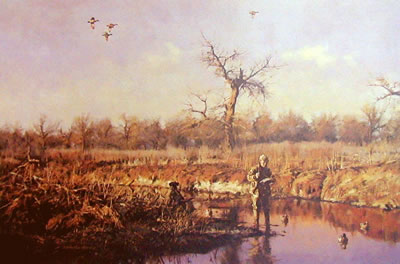
    Early Limit - Artist Proof
    Early Limit, an Eldridge Hardie Print

    End of the Season - Brown Trout
    Cutthroat Trout and Flies, an Eldridge Hardie Print

    [/su_table]

    8 foot- 4 piece- 3 weight Elkhorn Flyrod and Reel combo

    1 of 7 figurines: One of seven fine bisque porcelain sculptures, hand painted from Lenox
    Collections and Murari USA, plus six others.

    FOURSOME AT THE  SANCTUARY GOLF COURSE IN SEDALIA

    Guns Donated By Dick’s Sporting Goods:
    Win one of these guns at the banquet’s “gun board” raffle
    [Winner will pick up at Dicks after passing NICS background check]

    Bald Eagle photo by Mike Mauro, http://mauromedia.com – frame  donated by Grizzly Creek Custom Framing www.grizzlycreekframing.com

    Framed, limited edition Peter Eades print

    20 – 60 X60 spotting scope & a 10 – 30 X 50 Zoom Binoculars, in a hard side camo case with tripod & window mount

    Mini Bronco Helmets authgraphed by Knowshon Moreno

    “Last Glance” by Lorenzo Ghiglieri

    Limited Edition In Bronze
    Dimensions:26″h x 18″w

    Few words are needed to define and reveal the power and beauty of Lorenzo Ghiglieri’s art. It becomes evident when realizing the total scope of his genius. Expressed in his own evocative style, every unique creation is original, recognizing the truth that Lorenzo’s profound diversity and skill will stand the test of time.

    He has produced over 500 different bronze sculptures of wildlife, biblical, cultural, and historical themes plus more than 60 monument projects ranging from sculpting the largest grizzly bear in the world to pieces such as the twice life size sculpture of Abraham Lincoln and son Tad for the city hall in Kansas City, Missouri.

    Lorenzo’s work graces the walls of the most prestigious establishments in the world. His sculptures and paintings have been presented to Pope John Paul II at The Vatican in Rome, President Ronald Reagan at the White House, Mikhail Gorbachev of the Kremlin and King Juan Carlos of the Royal Palace in Madrid. Tiger Woods, Luciano Pavarotti and General Schwartzkopf are many others who take pride in their ownership of a Lorenzo Ghiglieri sculpture.

    In 1994, Lorenzo sculpted the “Official American Bald Eagle” in bronze, silver, and gold, now on display at the White House and part of their permanent collection.

    Eloquent, strong, and original. People from all over the world are excited about owning his works and enthused about being a part of his career. There is in his art an inspiration, a universal appeal that has meaning and purpose. This meaning rings clear. It is powerful. It is valuable. It is beautiful and it is American.

     The Little Jewel, Boulder

    photo